Thomas G. Oertner
Institute for Synaptic Physiology
Center for Molecular Neurobiology Hamburg (ZMNH)
Falkenried 94
20251 Hamburg, Germany
thomas.oertner@zmnh.uni-hamburg.de OertnerLab on Twitter
 orcid.org/0000-0002-2312-7528
Credit: Sophia Gee
Curriculum vitae
1996: Diploma in Biology at the Albert Ludwigs Universität, Freiburg
1997-99: PhD thesis in Alexander Borst's lab at the Friedrich-Miescher-Laboratory in Tübingen (Max Planck Society). I investigated calcium signaling in visual interneurons of the blowfly and in isolated neurons of the locust. During my PhD, I was a member of the "Graduiertenkolleg Neurobiologie Tübingen".
2000-03: Postdoc in Karel Svoboda's lab in Cold Spring Harbor, NY. To investigate release probabilities and response amplitudes at single synapses, I measured postsynaptic calcium transients in single spines by two-photon laser-scanning microscopy. Experience the beautiful spatial and temporal resolution of this technique in a movie of postsynaptic calcium signals. This project was supported by the Swartz Foundation.
2003-11: Research group leader at the Friedrich Miescher Institute in Basel, part of the Novartis Research Foundation. To stimulate individual cells in intact tissue, we started using variants of the light-gated ion channel Channelrhodopsin-2 as well as two-photon glutamate uncaging. With these techniques, we discovered that mGluR-dependent depression is restricted to spine synapses containing a 'spine apparatus'. We also found evidence for very strong depolarization of individual spines during synaptic transmission, an indication of electrical isolation of dendritic spines from their parent dendrites. Historic lab pictures can be found here, as well as our first realistic model of consciousness.
2005-2014: Faculty of the summer course 'Neurobiology' at the MBL in Woods Hole, MA. I highly recommend the Woods Hole courses! (fried squid - mmm!) I've also been involved with the Cold Spring Harbor Course 'Imaging Structure & Function in the Nervous System' and the FENS/CAJAL courses- they get the most amazing equipment for the students to play with!
Since October 2011: Professor for Neuroscience at the University of Hamburg. Director of the Institute for Synaptic Physiology at the Center for Molecular Neurobiology Hamburg (ZMNH). Member of the Academia Europeae since 2019. On the Board of the Hamburg Center of Neuroscience (HCNS).
Big thanks to our longtime collaborators
Benny Bettler in Basel,
Peter Hegemann in Berlin, Eric Schreiter
at HHMI's Janelia Farm, and Katalin Török at St George's in London!
Big shout-out to my fellow MicroCOPS Anne Schaefer,
Nils Brose and
Antoine Triller
who think that there is more to the brain than neurons.
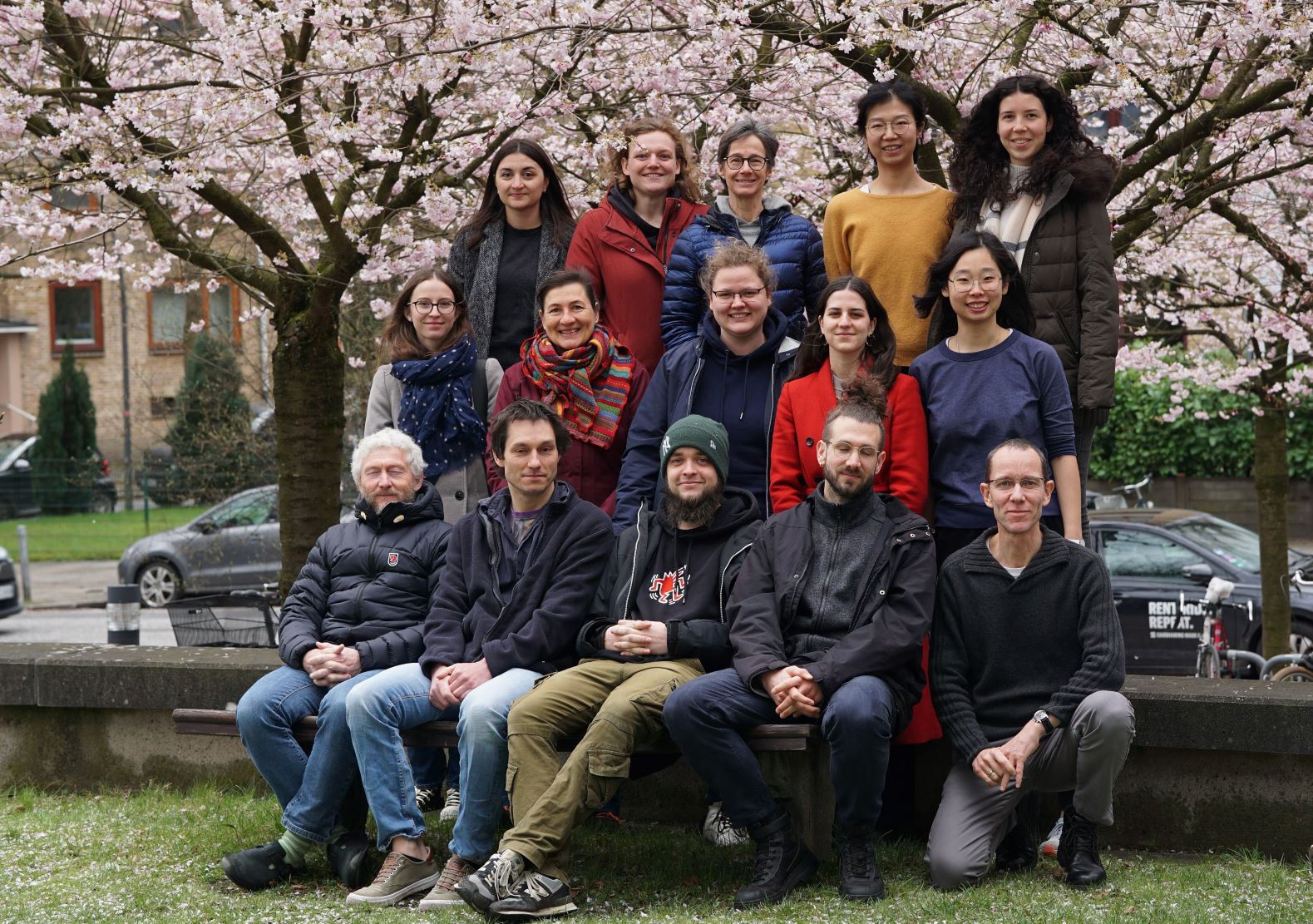
Here's the team in March 2023 (clic to enlarge)
Constructs
We have deposited a number of neuron-specific optogenetic tools on Addgene, including
- ER-GFP, labels the endoplasmic reticulum in neurons (Plasmid #22285), see Holbro et al., 2009.
- Ratio-sypHy, a ratiometric release indicator (Plasmid #44268), see Rose et al., 2013.
- slowChloC, the first chloride-conducting channelrhodopsin (Plasmid #52494), see Wietek el al., 2014.
- iChloC, an improved light-gated chloride channel with near perfect anion selectivity (Plasmid #66709),
see Wietek el al., 2015.
We have also deposited a floxed construct for selective inhibition of cre-expressing cells (Plasmid #70762). - RhGC, a light-activated guanylyl-cyclase with zero dark activity (Plasmid #66779), see Scheib el al., 2015.
- preSynTagMA, a presynaptic marker of activity (Plasmid #119738), see Nat Commun.
- postSynTagMA, a PSD-targeted marker of activity (Plasmid #119736), see Nat Commun.
- TubuTag, a photoconvertible calcium sensor tagged to the dendritic cytoskeleton (Plasmid #164184), see Fontiers article.
- PACmn, a photoactivatable adenylyl cylcase, membrane-targeted, with no dark activity (Plasmid #165491), see BMC Biol.
Other published constructs are available on request.
In the News
|
SynTagMA, a new tool to label high Ca2+ spines. Green are inactive spines, magenta active, cyan blobs are the presynaptic terminals we activated with Channelrhodopsin. Silver spheres are regions of interest, automatically detected. This piece of tissue is alive, not fixed! |
|---|
- ERC Synergy Grant MicroCOPS. Ärzteblatt, 11. Nov. 2020
- S. Lemm (2020) UKE-Forscherinnen und -Forscher machen aktive Synapsen sichtbar. Informationsdienst Wissenschaft 18.05.2020.
- L. Tetsch (2018) Turbulenzen um Synapsen. Laborjournal 4/2018:28-33. A discussion about spine neck resistance and its consequences.
- W. Rögener-Schwarz (2015) Bunter Denken. Bild der Wissenschaft, Themenheft 'Power fürs Hirn'.
- D. Evanko (2014) A better way to turn off neurons. Highlight in Nature Methods 11(6):608.
- Funktioniert das Langzeitgedächtnis anders als bisher angenommen? Neurologen und Psychiater im Netz, 16.12.2013.
- E. Pastrana (2011) Perfecting ChR2 (Research Highlight) Nature Methods 8(6):477.
- Function Of Neglected Structure In Neurons Revealed After 50 Years. ScienceDaily, 8 September 2009.
- J. C. Lopez (2002) From single lane to superhighway. Research Highlight in Nature Reviews Neuroscience 3:588.
Preprints
-
Andreas Franzelin, Paul J. Lamothe-Molina, Alexey Formozov, Christine E. Gee, Eric E Schreiter, Fabio Morellini, Thomas G. Oertner
Epigenetic repression of cFos supports sequential formation of distinct spatial memories. bioRxiv 2024.02.16.580703 -
Margarita Anisimova, Paul J. Lamothe-Molina, Andreas Franzelin, Aman S. Aberra, Michael B. Hoppa, Christine E. Gee, Thomas G. Oertner
Neuronal FOS reports synchronized activity of presynaptic neurons. bioRxiv 2023.09.04.556168 -
Nynke A. Veprek, Madeline H. Cooper, Laura Laprell, Emily Jie-Ning Yang, Sander Folkerts, Ruiyang Bao, Thomas G. Oertner, Liza A. Pon, J. Bradley Zuchero, Dirk H. Trauner
Optical Control of G-Actin with a Photoswitchable Latrunculin. bioRxiv 2023.07.17.549222 -
Shuting Yin, Christian Schulze, Thomas G. Oertner
Strong diffusional coupling between spines and dendrites promotes long-term potentiation of Schaffer collateral synapses. bioRxiv 435446
Publications
-
Lamothe-Molina PJ, Franzelin A, Beck L, Li D, Auksutat L, Fieblinger T, Laprell L, Ahlbeck J, Gee CE, Kneussel K, Engel AK, Hilgetag CC, Morellini F, Oertner TG (2022)
ΔFosB accumulation in hippocampal granule cells drives cFos pattern separation during spatial learning.
Nat Commun. 13(1):6376. -
Dürst CD, Wiegert JS, Schulze C, Helassa N, Török K, Oertner TG (2022)
Vesicular release probability sets the strength of individual Schaffer collateral synapses.
Nat Commun. 13(10):6126. -
Fieblinger T, Perez-Alvarez A, Lamothe-Molina PJ, Gee CE, Oertner TG (2022)
Presynaptic cGMP sets synaptic strength in the striatum and is important for motor learning.
EMBO Reports e54361. -
Fearey BC, Binkle L, Mensching D, Schulze C, Lohr C, Friese MA, Oertner TG, Gee CE (2022)
A glibenclamide-sensitive TRPM4-mediated component of CA1 excitatory postsynaptic
potentials appears in experimental autoimmune encephalomyelitis.
Sci Rep. 12(1):6000. -
Dürst CD, Oertner TG (2022) Imaging Synaptic Glutamate Release with Two-Photon Microscopy in Organotypic Slice Cultures.
Methods Mol Biol. 2417: 205-219. -
Anisimova M, van Bommel B, Wang R, Mikhaylova M, Simon Wiegert J, Oertner TG*, Gee CE* (2022) *equal contribution
Spike-timing-dependent plasticity rewards synchrony rather than causality.
Cereb Cortex, bhac050. Online ahead of print. -
Pulin M, Stockhausen KE, Masseck OA, Kubitschke M, Busse B, Wiegert JS, Oertner TG (2022)
Orthogonally-polarized excitation for improved two-photon and second-harmonic-generation microscopy,
applied to neurotransmitter imaging with GPCR-based sensors.
Biomedical Optics Express 13(2) 777-790. -
Yang S*, Constantin OM*, Sachidanandan D*, Hofmann H, Kunz TC, Kozjak-Pavlovic V, Oertner TG, Nagel G, Kittel RJ*, Gee CE*, Gao S* (2021) *equal contribution / co-corresponding
PACmn for improved optogenetic control of intracellular cAMP.
BMC Biology 19: 227. -
Perez-Alvarez A, Huhn F, Dürst CD, Franzelin A, Lamothe-Molina P, Oertner TG (2021)
Freeze-frame imaging of dendritic calcium signals with TubuTag.
Front. Mol. Neurosci. 14:635820. -
Gee CE, Oertner TG (2021)
Photoactivatable CaMKII: Rewiring the Brain, One Synapse at a Time.
Trends in Neurosciences 44(4):4. -
Laprell L, Schulze C, Brehme ML, Oertner TG (2021)
Optogenetic control of microglia membrane potential reveals signal transduction in chemotaxis.
J Neuroinflammation 18(1):21. Supplementary Figures -
Perez-Alvarez A, Yin S, Schulze C, Hammer JA, Wagner W, Oertner TG (2020)
Endoplasmic reticulum visits highly active spines and prevents runaway potentiation of synapses.
Nat Commun. 11:5083. -
Perez-Alvarez A*, Fearey B*, Schulze C, O'Toole RJ, Moeyaert B, Mohr MA, Arganda-Carreras I, Yang W, Wiegert JS, Schreiter ER, Gee CE, Hoppa MB, Oertner TG (2020)
Freeze-frame imaging of synaptic activity using SynTagMA.
Nat Commun. 11: 2464. *equal contribution -
Konietzny A, González-Gallego J, Bär J, Perez-Alvarez A, Drakew A, Demmers JAA, Dekkers DHW, Hammer JA 3rd, Frotscher M, Oertner TG, Wagner W, Kneussel M, Mikhaylova M (2019)
Myosin V regulates synaptopodin clustering and localization in the dendrites of hippocampal neurons.
J Cell Sci. 132(16). pii: jcs230177. -
Kerruth S, Coates C, Dürst CD, Oertner TG, Török K (2019)
The kinetic mechanisms of fast-decay red-fluorescent genetically encoded calcium indicators.
J Biol Chem. 294(11):3934-3946. -
Dürst CD, Wiegert JS, Schulze C, Helassa N, Kerruth S, Coates C, Geeves M, Török K, Oertner TG (2019)
High-speed imaging of glutamate release with genetically encoded sensors.
Nature Protocols 14(5):1401-1424. - Moeyaert B, Holt G, Madangopal R, Perez-Alvarez A, Fearey BC, Trojanowski NF, Ledderose J, Zolnik TA, Das A, Patel D,
Brown TA, Sachdev RNS, Eickholt BJ, Larkum ME, Turrigiano GG, Dana H, Gee CE, Oertner TG, Hope BT, Schreiter ER (2018)
Improved methods for marking active neuron populations.
Nat Commun. 9(1):4440. - J. S. Wiegert, M. Pulin, C. E. Gee, T. G. Oertner (2018)
The fate of hippocampal synapses depends on the sequence of plasticity-inducing events.
Elife 7. pii: e39151. -
Gromova KV, Muhia M, Rothammer N, Gee CE, Thies E, Schaefer I, Kress S, Kilimann MW, Shevchuk O, Oertner TG, Kneussel M (2018)
Neurobeachin and the kinesin KIF21B are critical for endocytic recycling of NMDA receptors and regulate social behavior.
Cell Rep. 23(9):2705-2717. - N. Helassa*, C. Dürst*, C. Coates, S. Kerruth, U. Arif, C. Schulze, J. S. Wiegert, M. Geeves, T. G. Oertner, K. Török (2018) Ultrafast glutamate sensors resolve high-frequency release at Schaffer collateral synapses. PNAS 115(21):5594-5599.
- J. Wietek, S. Rodriguez-Rozada, J Tutas, F Tenedini, C Grimm, T. G. Oertner, P Soba, P Hegemann, J. S. Wiegert (2017)
Anion-conducting channelrhodopsins with tuned spectra and modified kinetics engineered for optogenetic manipulation of behavior.
Sci Rep. 7(1):1495. Supplemental Information - S. H. Bitzenhofer, J. Ahlbeck, A Wolff, J. S. Wiegert, C. E. Gee, T. G. Oertner, I. L. Hanganu-Opatz (2017)
Layer-specific optogenetic activation of pyramidal neurons causes beta-gamma entrainment of neonatal networks.
Nat Commun. 8:14563. - J. S. Wiegert, C. E. Gee, T. G. Oertner (2017)
Stimulating Neurons with Heterologously Expressed Light-Gated Ion Channels.
Cold Spring Harb Protoc. doi:10.1101/pdb.top089714.
Download complete protocol. - C. E. Gee, I. Ohmert, J. S. Wiegert, T. G. Oertner (2017) Preparation of Slice Cultures from Rodent Hippocampus. Cold Spring Harb Protoc. doi:10.1101/pdb.prot094888
- J. S. Wiegert, C. E. Gee, T. G. Oertner (2017) Viral Vector-Based Transduction of Slice Cultures. Cold Spring Harb Protoc. doi:10.1101/pdb.prot094896
- J. S. Wiegert, C. E. Gee, T. G. Oertner (2017) Single-Cell Electroporation of Neurons. Cold Spring Harb Protoc. doi:10.1101/pdb.prot094904
- N. Takahashi, T. G. Oertner, P. Hegemann, M. E. Larkum (2016)
Active cortical dendrites modulate perception.
Science 354(6319), 1587-1590. Supplemental Material - J. S. Wiegert, T. G. Oertner (2016) How (not) to silence long-range connections with light. (News and Views) Nature Neuroscience 19(4), 527-528.
- C. E. Gee, T. G. Oertner (2016) Pull out the stops for plasticity. (News and Views) Nature 529, 164-165.
- J. Wietek, R. Beltramo, M. Scanziani, P. Hegemann, T. G. Oertner, J. S. Wiegert (2015)
An improved chloride-conducting channelrhodopsin for
light-induced inhibition of neuronal activity in vivo.
Scientific Reports 5, 14807. - U. Scheib, K. Stehfest, C. E. Gee, H. G. Körschen, R. Fudim, T. G. Oertner, P. Hegemann (2015)
The rhodopsin-guanylyl cyclase of the aquatic
fungus Blastocladiella emersonii enables fast optical control of cGMP
signaling.
Science Signaling 8, rs8. - J. S. Wiegert, T. G. Oertner (2015) Neighborly synapses help each other out. (News and Views) Nature Neuroscience 18, 326–327.
- C. Blumer, C. Vivien, C. Genoud, A. Perez-Alvarez, J. S. Wiegert, T. Vetter, T. G. Oertner (2014)
Automated analysis of spine dynamics on live CA1 pyramidal cells.
Medical Image Analysis 19, 87–97. Correlative 2P/EM datasets - J. Wietek , J. S. Wiegert, N. Adeishvili, F. Schneider, H. Watanabe, S. P. Tsunoda, A. Vogt, M. Elstner, T. G. Oertner, P. Hegemann (2014)
Conversion of Channelrhodopsin into a light-gated chloride channel.
Science 344(6182):409-412. Supplemental material. Highlight in Nature Methods. Perspectives in Science. - T. G. Oertner (2014) Active dendrites under parental supervision. (Preview) Neuron 81, 1217-1219.
- J. S. Wiegert, T. G. Oertner (2013) Long-term depression triggers the selective
elimination of weakly integrated synapses.
PNAS 110(47): E4510-E4519. - T. Rose, P. Schoenenberger, K. Jezek, T. G. Oertner (2013)
Developmental refinement of vesicle cycling at Schaffer collateral synapses.
Neuron 77(6): 1109-21. Supplement - Oertner TG, Helmchen F, de Lecea L, Beck H, Konnerth A, Kaupp B, Knöpfel T, Yawo H, Häusser M (2013)
Optogenetic analysis of mammalian neural circuits.
In: Hegemann P & Sigrist S (Eds.), Optogenetics (pp. 109-126). Berlin: De Gryter. ISBN: 978-3-11-027072-3. - D. Huber, D. A. Gutnisky, S. Peron, D. H. O’Connor, J. S. Wiegert, L. Tian, T. G. Oertner, L. L. Looger, K. Svoboda (2012)
Multiple dynamic representations in the motor cortex during sensorimotor learning.
Nature 484,473–478. Supplement - J. Hao, T. G. Oertner (2012)
Depolarization gates spine calcium transients and spike-timing-dependent potentiation. (Review)
Current Opinion in Neurobiology 22: 509–515. - T. G. Oertner (2011) The Lego-logic of optogenetics. (News and Views) Nature Methods 8(12): 2011-1013.
- C. Blumer, C. Vivien, T. G. Oertner, T. Vetter (2011)
Fluorescence image segmentation by using digitally reconstructed fluorescence images.
Proceedings of the Sixth Workshop on Microscopic Image Analysis with Applications in Biology (MIAAB 2011), Heidelberg. - A. Berndt, P. Schoenenberger, J. Mattis, K. M. Tye, K. Deisseroth, P. Hegemann, T. G. Oertner (2011)
High-efficiency Channelrhodopsins for fast neuronal stimulation at low light levels.
PNAS 108 (18) 7595-7600.
See also Research Highlight in Nature Methods 8(6), June 2011. - J. S. Wiegert, T. G. Oertner (2011)
Shapeshifting for memory: Biochemical and electrical signaling in dendritic spines. (Review)
e-Neuroforum 2011(2): 6-12.
German version: Neuroforum 1/11: 12-20. - M. Stierl, P. Stumpf, D. Udwari, R. Gueta, R. Hagedorn, A. Losi, W. Gärtner W, L. Petereit, M. Efetova, M. Schwarzel, T.G. Oertner, G. Nagel, P. Hegemann (2011)
Light-modulation of cellular cAMP by a small bacterial photoactivated adenylyl cyclase, bPAC, of the soil bacterium Beggiatoa.
J Biol Chem. 286(2):1181-8. - N. Holbro, A. Grunditz, J. S. Wiegert, T. G. Oertner (2010)
AMPA receptors gate spine Ca2+ transients and spike-timing-dependent potentiation.
PNAS 107 (36) 15975-80. -
N. Guetg, S.A. Aziz, N. Holbro, R. Turecek, T. Rose, S. Riad, M. Gassmann, S. Moes, P. Jenoe, T.G. Oertner, E. Casanova, B. Bettler (2010)
NMDA Receptor-Dependent GABAB Receptor Internalization via CaMKII Phosphorylation of Serine 867 in GABAB1.
PNAS 107 (31) 13924-29. -
P. Schoenenberger, Y.P. Zhang Schärer, T. G. Oertner (2010)
Channelrhodopsin as a tool to study synaptic transmission and plasticity. (Review)
Exp Physiol 96.1: 34-39. -
J. Krol, V. Busskamp, I. Markievicz, M. B. Stadler, S. Ribi, J. Richter, J. Duebel, S. Bicker, H.J. Fehling, D. Schubeler, T. G. Oertner, G. Schratt, M. Bibel, B. Roska, W. Filipowicz (2010)
Characterizing light-regulated retinal microRNAs reveals rapid turnover as a common property of neuronal microRNAs.
Cell 141(4): 618-31. -
P. Schoenenberger, D. Gerosa, T. G. Oertner (2009)
Temporal control of immediate early gene induction by light.
PLoS ONE 4(12): e8185. | doi:10.1371/journal.pone.0008185 -
N. Holbro, A. Grunditz, T. G. Oertner (2009)
Differential distribution of endoplasmic reticulum controls metabotropic signaling and plasticity at hippocampal synapses.
PNAS 106: 15055-15060. S.I. -
T. G. Oertner (2009)
How do synapses measure milliseconds?
Frontiers in Computational Neuroscience, April 2009, Volume 3, Article 7. -
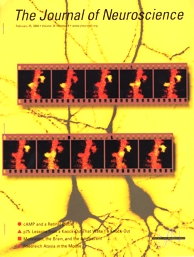
A. Grunditz, N. Holbro, L. Tian, Y. Zuo, T. G. Oertner (2008)
Spine neck plasticity controls postsynaptic calcium signals through electrical compartmentalization.
Journal of Neuroscience 28(50): 13457-66. S1 S2 S3 S4 NEURON model -
Y-P. Zhang, N. Holbro, T. G. Oertner (2008)
Optical induction of plasticity at single synapses reveals input-specific accumulation of aCaMKII.
PNAS 105(33): 12039-44. S.I. -
P. Schoenenberger, A. Grunditz, T. Rose, T. G. Oertner (2008)
Optimizing the spatial resolution of Channelrhodopsin activation.
Brain Cell Biology 36(1-4): 119-27. -
Y-P. Zhang, T. G. Oertner (2007)
Optical induction of synaptic plasticity using a light-sensitive channel.
Nature Methods 4(2): 139-141. -
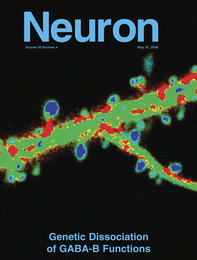
R. Vigot, S. Barbieri, H. Bräuner-Osborne, R. Turecek, R. Shigemoto, YP. Zhang, R. Lujan, L.H. Jacobson, B. Biermann, JM. Fritschy,
CM. Vacher, M. Müller, G. Sansig, N. Guetg, J.F. Cryan, K. Kaupmann, M. Gassmann M, T.G. Oertner, B. Bettler (2006)
Differential compartmentalization and distinct functions of GABA(B) receptor variants.
Neuron 50(4): 589-601. - T. G. Oertner (2006) The bright side of life. (Book review) Nature 440, 280-280.
-
T. G. Oertner, A. Matus (2004) Calcium regulation of actin dynamics in dendritic spines. (Review)
Cell Calcium 37(5): 477-482. -
I. Brunig, S. Kaech, H. Brinkhaus, T.G. Oertner, A. Matus (2004)
Influx of extracellular calcium regulates actin-dependent morphological plasticity in dendritic spines.
Neuropharmacology 47(5): 669-676. -
R. Yasuda, E. A. Nimchinsky, V. Scheuss, T. A. Pologruto, T. G. Oertner, B. L. Sabatini, K. Svoboda (2004)
Imaging calcium dynamics in small neuronal compartments.
Science STKE Vol. 2004 (219), pl5. -
E. A. Nimchinsky, R. Yasuda, T. G. Oertner, K. Svoboda (2004)
The number of glutamate receptors opened by synaptic stimulation in single hippocampal spines.
Journal of Neuroscience 24: 2054-2064. -
T. G. Oertner (2002)
Functional imaging of single synapses in brain slices.
Experimental Physiology 87.6, 733-736. -
T. G. Oertner, K. Svoboda (2002)
Subliminal messages in hippocampal pyramidal cells. (Perspectives)
Journal of Physiology 543(2): 397. -
T. G. Oertner, B. L. Sabatini, E. A. Nimchinsky, K. Svoboda (2002)
Facilitation at single synapses probed with optical quantal analysis.
Nature Neuroscience 5 (7): 657-664. -
B. L. Sabatini, T. G. Oertner, K. Svoboda (2002)
The life cycle of Ca2+ ions in dendritic spines.
Neuron 33: 439-452. -
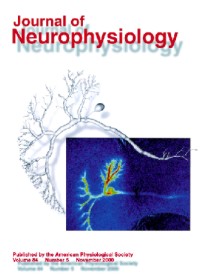
T. G. Oertner, T. M. Brotz, A. Borst (2001)
Mechanisms of dendritic calcium signaling in fly neurons.
Journal of Neurophysiology 85 (1): 439-447. -
T. G. Oertner (2000)
Mechanismen dendritischer Kalziumdynamik: Eine in-vitro-Studie an Insektenneuronen.
(Dissertation)
Medien Verlag Köhler, Tübingen, ISBN 3-932694-66-X -
T. G. Oertner, S. Single, A. Borst (1999)
Separation of voltage- and ligand-gated calcium influx in locust neurons by optical imaging.
Neuroscience Letters 274 (2): 95-98.